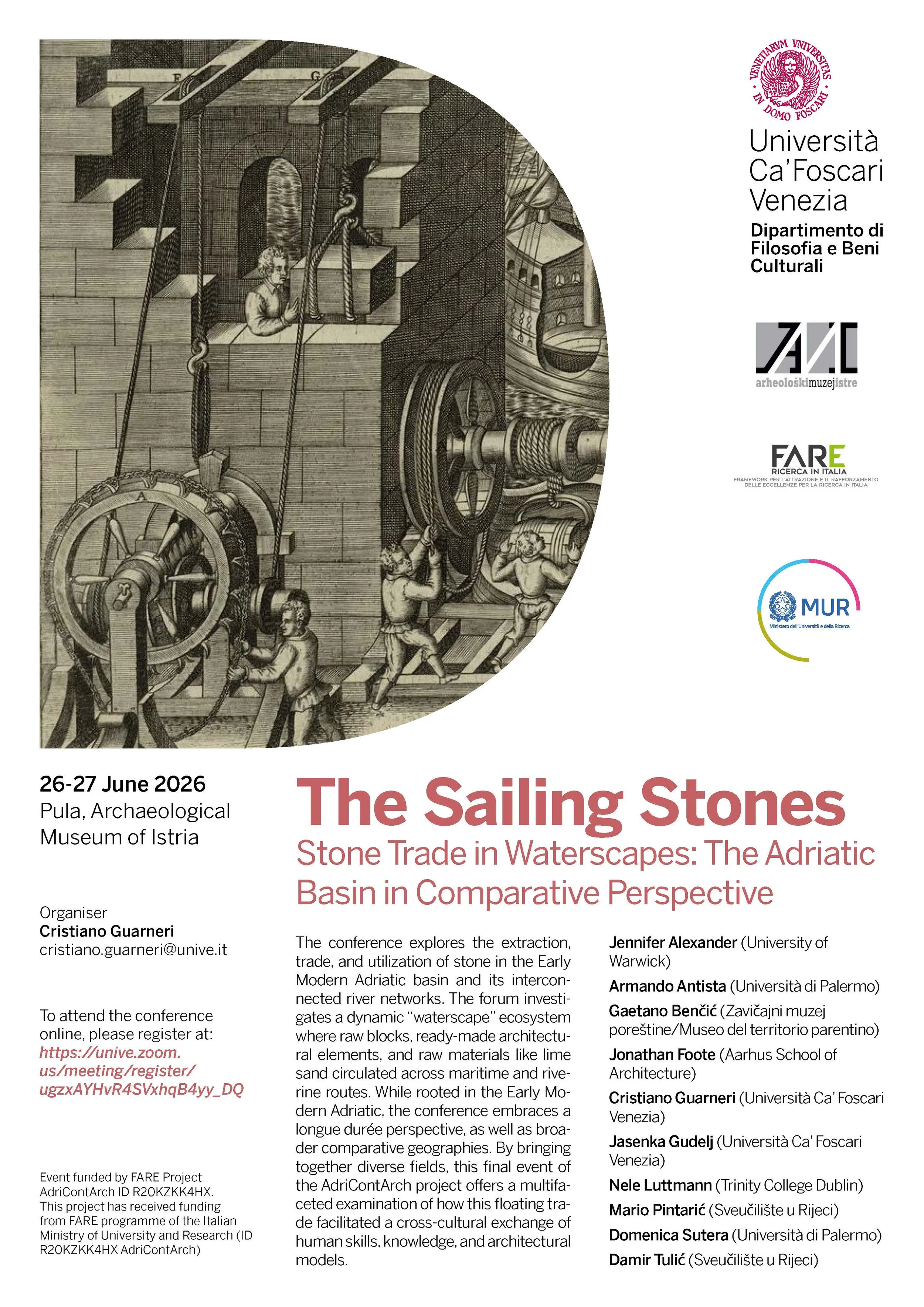
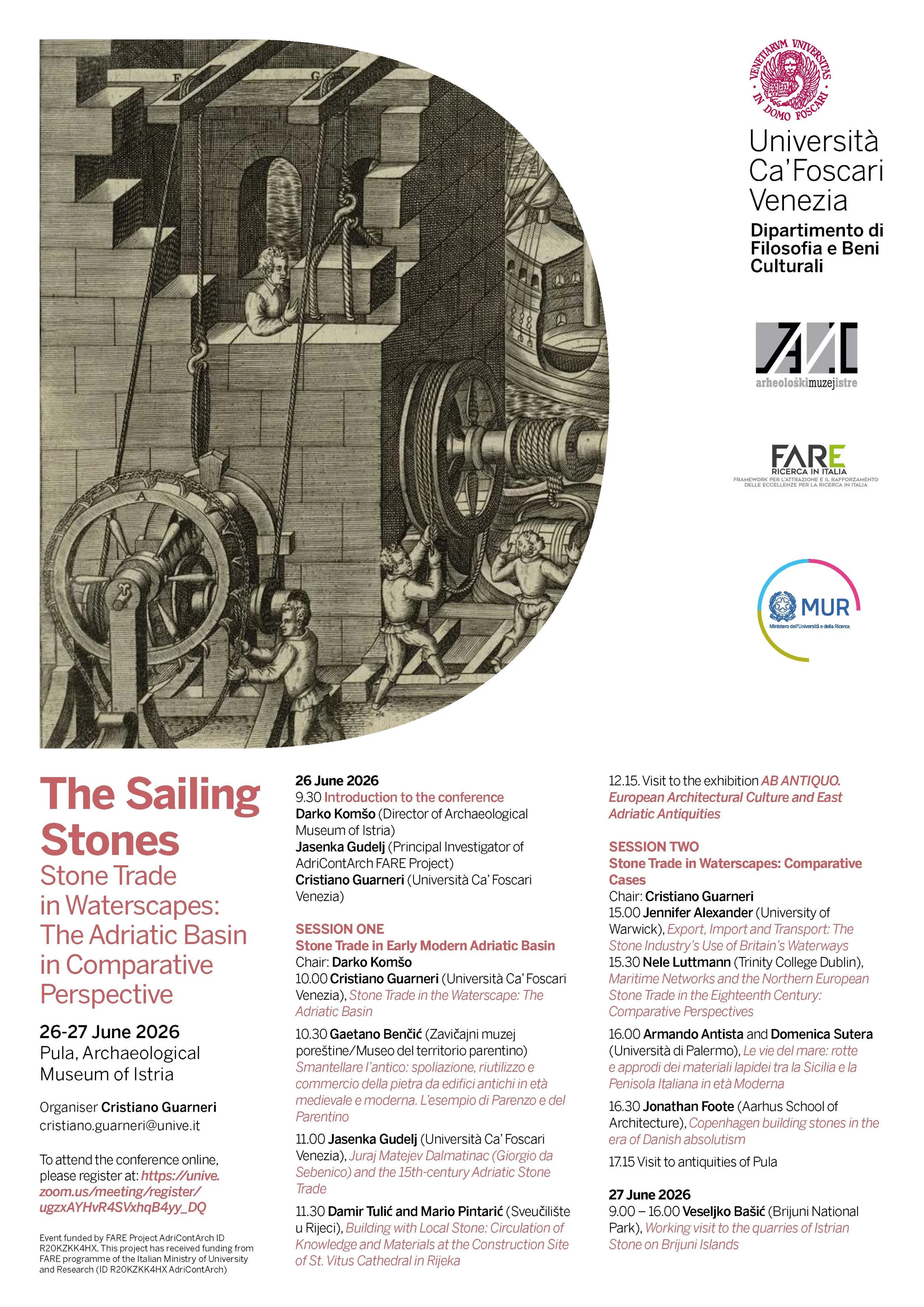
The international conference, The Sailing Stones. Stone Trade in Waterscapes: The Adriatic Basin in Comparative Perspective (June 26–27), investigates how early modern maritime and riverine "floating trades" facilitated the cross-cultural exchange of skills, knowledge, and architectural materials. While rooted in the Adriatic ecosystem, the forum embraces broader comparative geographies to examine the complex networks linking quarrying regions to distant markets. The conference is set at the Archaeological Museum of Istria in Pula, and interested participants may join the proceedings virtually via Zoom: https://unive.zoom.us/meeting/register/ugzxAYHvR4SVxhqB4yy_DQ#/registration
Contributing a northern European comparative lens to this discussion, this paper draws upon archival research to contrast the British trade in Portland limestone with the Dutch distribution of Italian marble. By analysing the logistical challenges, maritime risks, and legal frameworks documented in the Bodleian Libraries and the Amsterdam City Archives, the study illustrates the transregional nature of eighteenth-century stone economies. The presentation demonstrates how archival microhistories illuminate the material and contractual infrastructures that underpinned early modern construction cultures.